MIGS stands for Minimally Invasive Glaucoma Surgery and refers to a group of procedures designed to lower pressure inside the eye using a less invasive approach than traditional glaucoma surgery.Many MIGS procedures work by improving the drainage of aqueous humor, the natural fluid inside the eye. When this fluid does not drain properly, pressure can build within the eye and contribute to optic nerve damage.Depending on the individual patient and procedure, MIGS may help:
• Lower intraocular pressure
• Improve the eye’s natural fluid drainage
• Reduce dependence on glaucoma eye drops for some patients
• Manage glaucoma while potentially avoiding or delaying more invasive glaucoma surgeryTreat glaucoma at the same time as cataract surgery
Your eye doctor will determine which treatment may be appropriate based on the type and severity of your glaucoma, your eye pressure, current medications and overall eye health.
iStent is a tiny implant designed to help lower eye pressure in certain patients with mild to moderate primary open-angle glaucoma.The implant is placed within the eye’s natural drainage pathway, where it bypasses an area of resistance in the trabecular meshwork. This allows aqueous fluid to flow more freely into Schlemm’s canal, an important part of the eye’s natural drainage system.For appropriate patients, iStent can be implanted during cataract surgery, allowing the surgeon to address both cataracts and glaucoma during the same procedure.The goal is to improve the eye’s natural drainage, lower intraocular pressure and potentially reduce the need for glaucoma medications in some patients.
What Is the Hydrus® Microstent?
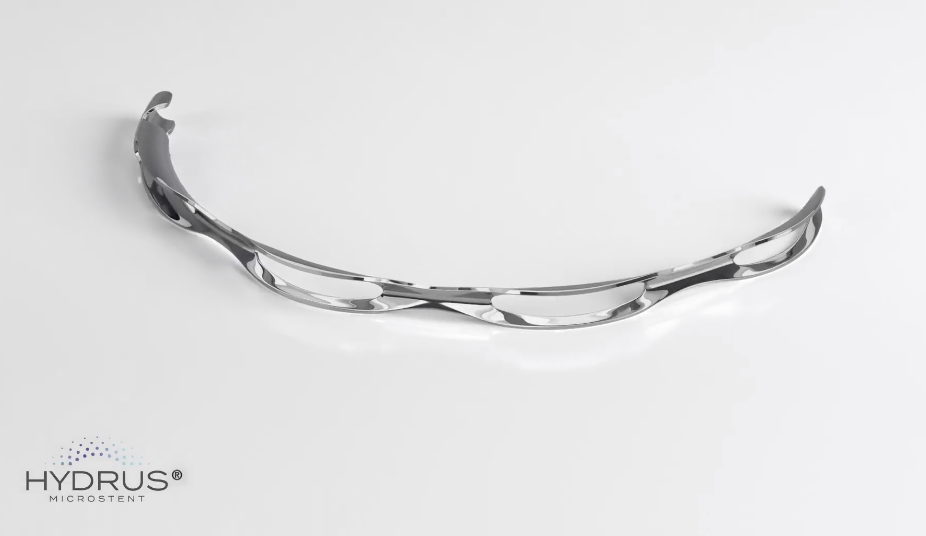
The Hydrus Microstent is another minimally invasive glaucoma treatment designed for certain patients with mild to moderate primary open-angle glaucoma who are undergoing cataract surgery.
Roughly the size of an eyelash, the Hydrus Microstent is placed within Schlemm’s canal, part of the eye’s natural drainage system. Its unique design helps bypass the trabecular meshwork while also supporting and expanding a portion of the drainage canal.
By helping aqueous fluid flow more efficiently through the eye’s natural drainage pathway, the Hydrus Microstent can help lower intraocular pressure.
Like iStent, Hydrus can be implanted during cataract surgery, giving appropriate patients an opportunity to address their cataract and glaucoma during the same procedure.
What Is iDose® TR?
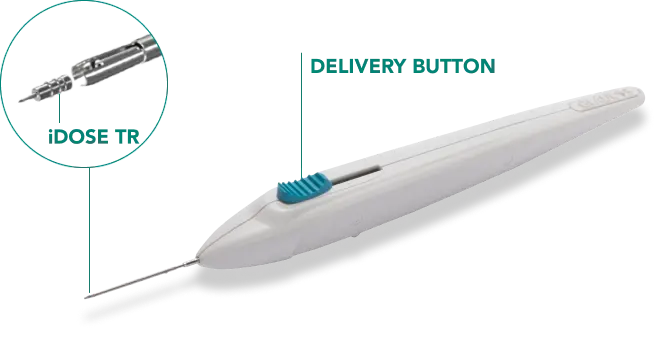
iDose TR offers a different approach to managing glaucoma. Rather than improving fluid drainage like iStent or Hydrus, iDose TR is a tiny implant designed to continuously deliver glaucoma medication directly inside the eye.T
he implant contains travoprost, a medication commonly used to lower intraocular pressure. Once placed inside the eye, iDose TR continuously releases the medication, eliminating the need for the patient to administer that particular medication as a daily eye drop.
iDose TR may be an option for certain patients with open-angle glaucoma or ocular hypertension. It is placed through a small corneal incision and positioned within the eye to provide continuous medication delivery.
For appropriate patients, this approach can help provide ongoing eye-pressure control while reducing the burden associated with daily glaucoma eye drops.
Combining Glaucoma Treatment with Cataract Surgery
For patients who have both cataracts and glaucoma, cataract surgery may provide an opportunity to address both conditions.
During cataract surgery, the eye’s cloudy natural lens is removed and replaced with a clear intraocular lens (IOL). For appropriate patients, a MIGS device such as iStent or the Hydrus Microstent can also be placed during the procedure to help improve the eye’s natural fluid drainage and lower eye pressure.
The goal of this combined approach is twofold: improve vision affected by cataracts while also helping manage the elevated eye pressure associated with glaucoma.
Your surgeon will determine whether combining cataract surgery with a glaucoma procedure is appropriate for your individual condition.
Can These Treatments Reduce the Need for Glaucoma Eye Drops?
For some patients, advanced glaucoma treatments may reduce their dependence on daily glaucoma medications.
MIGS procedures such as iStent and Hydrus are designed to improve fluid drainage and may reduce the number of glaucoma medications needed for some patients.iDose TR takes a different approach by continuously delivering travoprost directly inside the eye, reducing the need to administer that medication as a daily eye drop.
Results vary from patient to patient, and some people will still need glaucoma eye drops or other treatments following a procedure.
It is important to remember that these treatments do not cure glaucoma or restore vision already lost to the disease. Their purpose is to help control intraocular pressure and reduce the risk of additional optic nerve damage.
Regular glaucoma examinations and pressure checks remain important following treatment.


.svg)


